
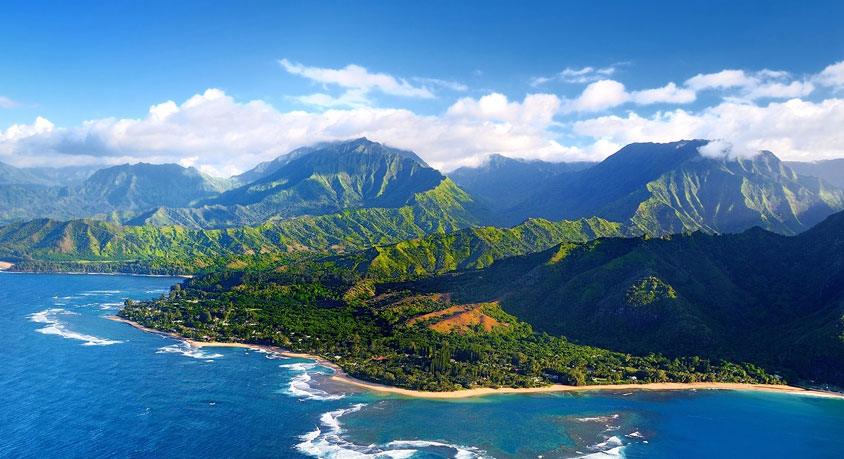
Hawaii is a desirable year-round destination. Winters are rainy, and hurricane season runs from June through November, although major storms are rare. Winter also brings some of the biggest surfing waves on the island, especially on the North Shore beaches. Typically, April, May, September and October are the months when the most consistently good weather is found. Hawaii enjoys a warm climate throughout the year, with average high temperatures of 26 - 28°C in winter and 29 - 31°C in summer, the biggest variables being rain and surf conditions.
Hawaii's best hotels and family-friendly hotels need to be booked well in advance, especially in July, August, late December and early January. It's best to make reservations at least three months in advance to ensure you get the room of your choice.
For surfers, the best time to surf in Hawaii depends on one's skill level. the North Shore of Oahu receives the biggest waves from November through March, especially December and January, which is the best time for professionals and seasoned surfers, as well as spectators. Beginners can opt for the south side of the island during the winter months, or travel during the summer months when the waves are especially calm from May through September.
Swimming and snorkeling are available year-round in Hawaii, but the summer months (May through September) are ideal. This is the time of year when the water is warmer, the waves are smaller, and the skies are clearer, making it perfect for these water activities. The Big Island and Maui tend to have the best snorkeling conditions because their snorkeling spots are less affected by the eastern trade winds. Kauai, on the other hand, is relatively less reliable for snorkeling due to the year-round rain that reduces visibility in the water.
Hawaii has some of the most amazing hiking trails in the world, especially on Kauai. While hiking can be done year-round, summer is usually the best. The days are longer in the summer and the trails tend to be drier. It can get very hot in the summer, though, so be sure to bring plenty of water and sunscreen, and plan to start your hike in the morning when the temperatures are cooler.
From December through April, whales travel from Alaska to Hawaii for the winter. Peak whale watching time is late February through early March, after the calves are born. Whales can be seen off the coast of every island, but tend to be concentrated on the western coast of Maui and between the neighboring islands of Molokai and Lanai.
Kilauea Volcano on the Big Island has been erupting since 1983. There is no specific time of year when you can see more or less lava than at other times, and the main factor in choosing when to visit is the weather. Summer (May through September) is the best time to visit the volcano while staying warm, as temperatures at higher elevations are about 6 - 11 degrees Celsius below sea level, and winter temperatures average 8 - 12 degrees Celsius.
Disclaimer: Mention of any brand or trademark is for identification only and does not imply partnership or endorsement